
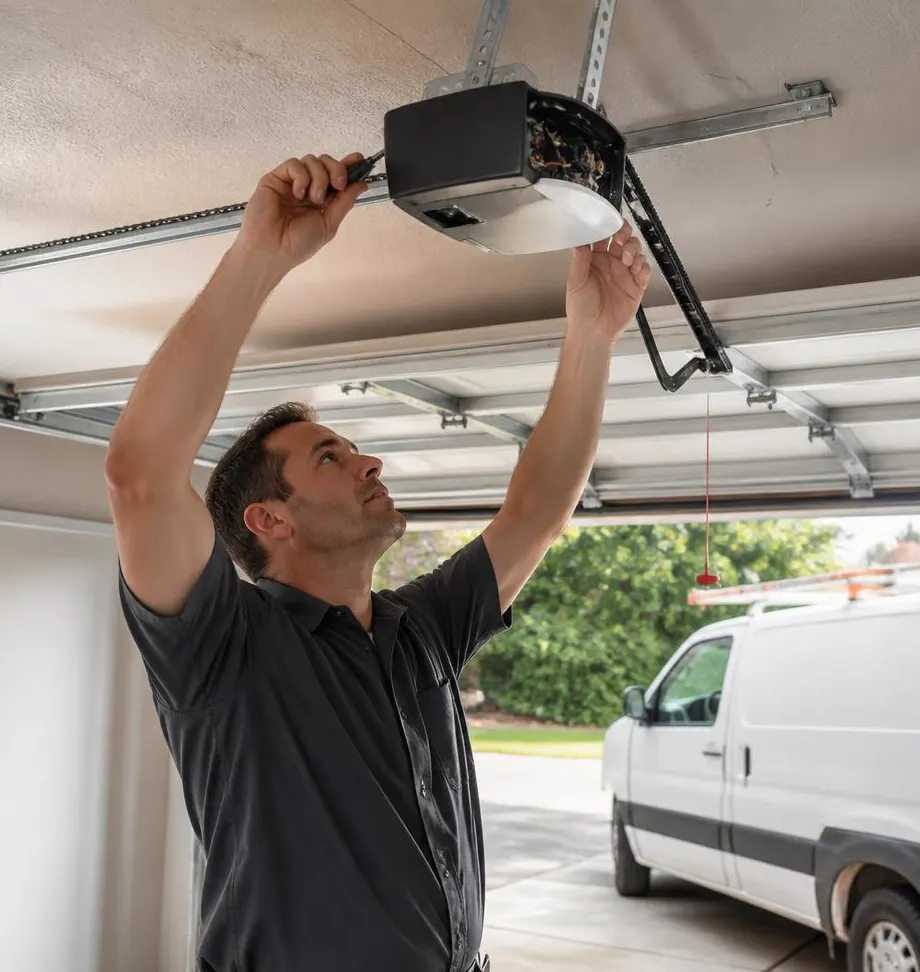
What a Technician Sees on a Typical Call
Most spring calls in this area start the same way: a door that worked fine yesterday now won't budge, or it opens a few inches and stalls. Sometimes there's a loud bang from the garage overnight — that's usually the spring itself snapping. On older homes around Old Town, Cross City, and Chiefland, we also see springs that are rusted or pitted from years of humidity and salt-tinged air, even well inland from the coast. Rust doesn't just look bad; it weakens the coil and shortens the spring's life, so it fails sooner than a dry-climate spring would.
What Spring Replacement Typically Costs
Garage door springs come in two main types — torsion springs (mounted on a bar above the door) and extension springs (stretched along the horizontal tracks). Nationally, homeowners should expect ranges like these as a starting point, not a quote:
- Single torsion spring replacement: roughly $150 to $350, including parts and labor.
- Both torsion springs replaced: roughly $250 to $450, since techs almost always recommend replacing both when one fails.
- Extension spring replacement (pair): roughly $100 to $300.
- Heavy-duty or high-cycle springs for larger, insulated, or commercial doors: $300 to $600 or more.
These are national ranges meant to give you a sense of scale. Your actual price depends on the door, the springs it needs, and the company doing the work — always get a written quote before anything is replaced.
What Pushes the Price Up
Door size and weight. A standard single-car door needs lighter springs than a double-wide or an insulated steel door, which weighs more and demands a stronger spring to lift it safely.
Spring type and cycle rating. Standard-cycle springs are rated for fewer open-close cycles than high-cycle springs. If you use your garage daily — or run a business with frequent door traffic in Trenton or Fanning Springs — a high-cycle spring costs more upfront but needs replacing less often.
Rust and corrosion. Humidity and salt air accelerate corrosion on springs, cables, and hardware. If a tech finds rust on the torsion bar, end bearings, or cable drums while replacing a spring, fixing those at the same time adds to the bill — but skipping them usually means a second service call sooner than you'd like.
Hardware that fails alongside the spring. Worn cables, a cracked bearing plate, or a bent torsion bar often show up during inspection. Replacing these at the same time is usually cheaper than paying for a separate visit later.
After-hours or emergency service. A spring that snaps on a weekend or during a storm, trapping your car inside, typically costs more to address same-day than a scheduled daytime appointment.
What Keeps the Price Down
Routine tune-ups catch worn springs before they snap, which means a planned replacement instead of an emergency one. Lubricating moving parts and keeping tracks clean also reduces strain on the springs themselves. And replacing both springs together, even if only one has failed, is often more cost-effective in the long run than paying for labor twice within a year or two — mismatched springs of different ages tend to wear unevenly and fail again sooner.
What a Real Quote Should Include
A trustworthy quote should spell out, in writing, before any work begins:
- The spring type, size, and cycle rating being installed
- Whether one or both springs are being replaced
- Labor cost separate from parts cost
- Any additional hardware the technician recommends replacing, and why
- Whether the visit includes a basic safety check of cables, rollers, and the opener's auto-reverse function
If a quote is vague about spring size or cycle rating, ask. The wrong spring for your door's weight either struggles to lift it or wears out fast — neither is a bargain.
Why This Matters More in Humid, Storm-Prone Areas
Dixie County's combination of heat, humidity, and seasonal storms is tougher on garage door hardware than drier climates. Moisture causes metal to rust and wood-paneled doors to swell slightly, which puts extra strain on springs as they work harder to lift a door that's not moving as freely as it should. During hurricane season, a door that relies on a weakened spring is also more vulnerable when wind load puts added stress on the whole system. Keeping springs in good shape isn't just about convenience — it's part of keeping the door functioning correctly when wind-load matters most.
When to Call Old Town Garage Door Repair
If your door is slow to open, sagging on one side, or you heard a loud bang followed by the door refusing to move, it's time to call. We'll inspect the springs, cables, and hardware, give you a clear written quote before any work starts, and handle the garage door spring repair safely — these are under high tension and not a DIY job. If we find related wear on cables or rollers, we'll flag it, and our garage door tune-up and maintenance service can catch these issues before they turn into a stuck door on a Saturday morning.
Serving Old Town, Cross City, Fanning Springs, Chiefland, Trenton, Horseshoe Beach, Suwannee, and Jena — call Old Town Garage Door Repair for a straightforward quote and a technician who shows up on time.