
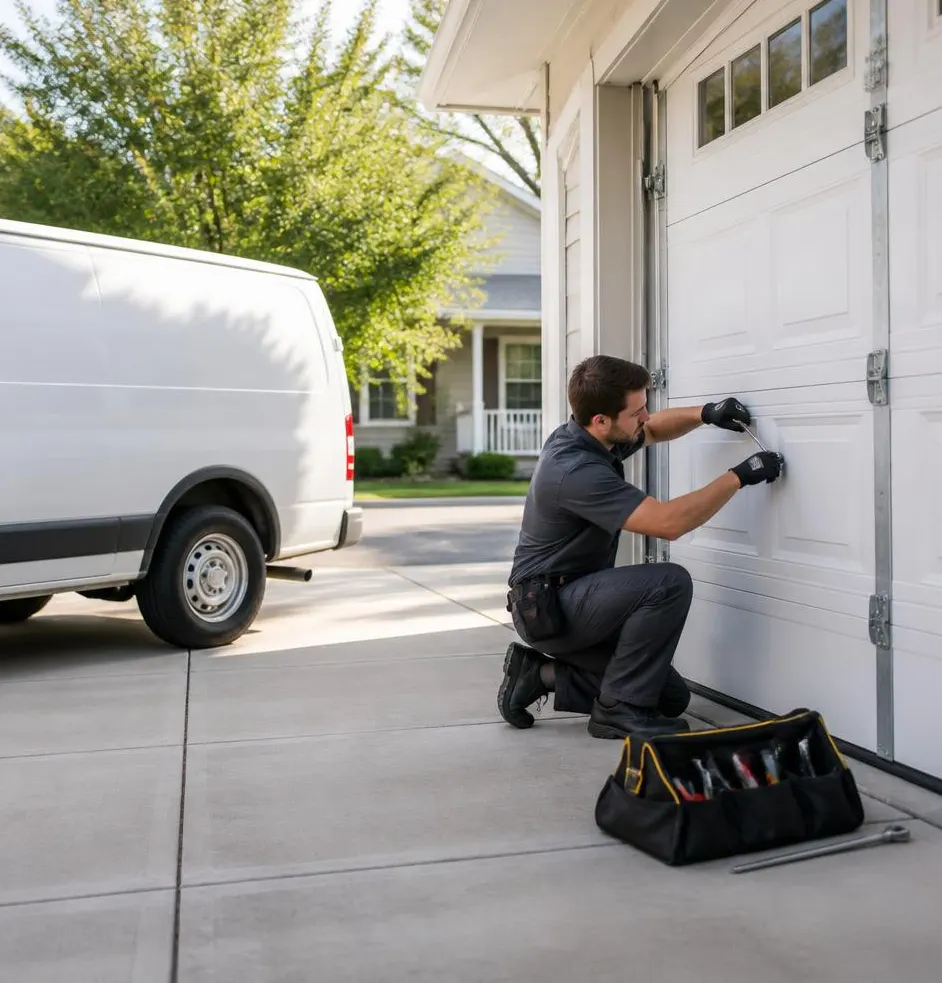
The Fix Everyone Reaches For First
Here's how the argument usually goes: one of you spots rust on the track or hinges, grabs a can of WD-40 or spray lubricant, hoses it down, and calls it solved. The other one isn't convinced. Honestly? The lubricant trick is tempting because it works visually right away. The squeak stops, the rust looks a little less orange, and the door moves smoother for a week or two. It feels like a win.
The problem is that spray lubricant doesn't remove rust or stop it from coming back — it just temporarily masks the friction. Underneath, the metal is still corroding, and now it's coated in a film that can trap grit and moisture against the surface instead of letting it evaporate. Same thing with painting over a rusty spot: it looks fixed for a photo, but the rust keeps working underneath the paint.
What's Actually Happening to Your Door
In this part of Florida, garage doors deal with a one-two punch most of the year: heavy humidity that never fully clears, plus regular afternoon downpours that blow moisture straight into the garage opening, hardware, and tracks. If you're closer to the coast, salt air adds a third layer — salt accelerates corrosion on any exposed metal, including springs, hinges, rollers, and the bottom of steel panels.
Rust and swelling are actually two different reactions to the same root cause: trapped moisture.
- Rust happens on metal parts — springs, tracks, hinges, the bottom panel edge, the opener's metal rail — when moisture sits on the surface long enough for oxidation to start eating into it.
- Swelling happens on wood or composite panels, and sometimes around weatherstripping, when the material absorbs humidity faster than it can dry out, causing it to expand, warp, or bow.
Both get worse with repeated wet-dry cycles, which is exactly what happens when a humid morning is followed by a sudden downpour, then baking afternoon sun that dries the outside of the door while the inside stays damp.
How to Tell What You're Actually Dealing With
Before you settle the argument, check for these real symptoms:
- Grinding or scraping noise when the door moves — often rust buildup inside the track or on roller bearings.
- Flaking orange or reddish-brown residue on springs, hinges, or the bottom corner brackets.
- A door that sticks or binds at one spot on its way up or down — could be a rusted track or a swollen panel edge rubbing against the frame.
- Visible bulging or a wavy look along a wood or composite panel, especially near the bottom where rain splashes up.
- Gaps that didn't used to be there around the weatherstripping, caused by the panel shrinking back down unevenly after swelling.
- The opener straining or reversing — a swollen or rusted door is heavier and harder to move, and the opener will often tell on it before you notice visually.
What Actually Helps
Short-term, drying out the area and removing loose rust with a wire brush does more good than any spray lubricant. For hardware, a light coat of actual garage door lubricant (not household oil) on clean, dry metal helps going forward — but only after the rust is addressed, not instead of addressing it.
Long-term, the fix depends on how far it's gone:
- Surface rust on hardware can often be cleaned and treated.
- Rust that's pitted the metal or weakened a spring's coil needs replacement — a pitted spring is a safety issue, not a cosmetic one.
- Swollen panels that have warped enough to bind against the track or frame usually need to be replaced rather than dried out, since the material rarely returns to its original shape.
When to Call Old Town Garage Door Repair
If you're seeing rust on springs or hardware, or a panel that's swelling and catching on the frame, it's worth having it looked at before storm season cycles put more stress on a weakened part. We offer Garage Door Tune-Up & Maintenance to catch rust and moisture damage early, lubricate and adjust hardware properly, and check that springs and cables are still rated to handle the load safely. If a panel has already warped past the point of drying out, our Garage Door Panel Replacement service gets it swapped without replacing the whole door.
If your garage door in Old Town, Cross City, Fanning Springs, Chiefland, Trenton, Horseshoe Beach, Suwannee, or Jena is showing rust, swelling, or sticking, give Old Town Garage Door Repair a call. We'll tell you straight whether it's a quick fix or something that needs replacing — no guesswork, no upsell.