
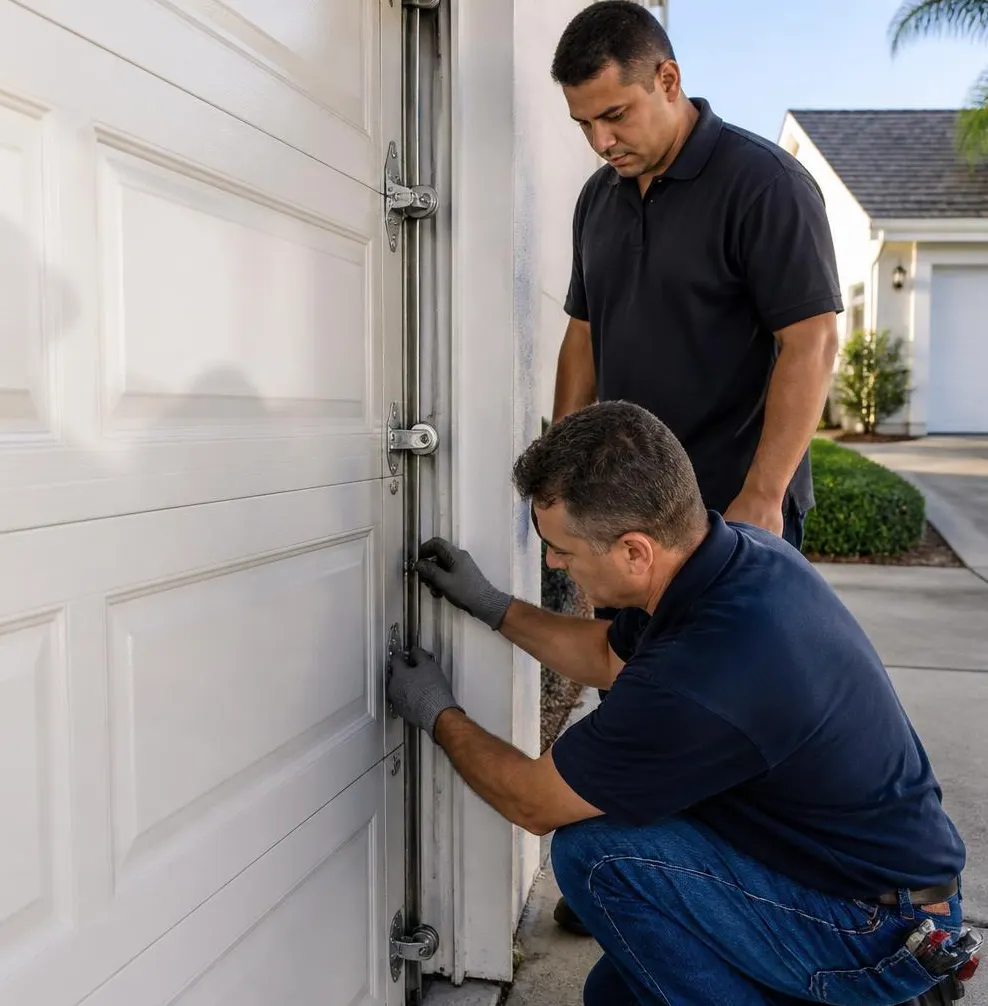
Getting your garage door ready for winter in Old Town isn't about insulating against deep freezes—it's about undoing the damage hurricane season left behind and prepping for the occasional cold, dry snap. That means checking for rust, re-lubricating parts that have been sitting in humidity for months, and making sure seals and hardware are tight before cooler, drier air sets in.
Why Old Town Winters Still Stress a Garage Door
Winters here are mild compared to most of the country, but that doesn't mean your garage door gets a free pass. After months of afternoon downpours, high humidity, and salt-tinged air (especially if you're closer to the coast around Horseshoe Beach or Suwannee), metal hardware has had plenty of time to start rusting quietly. Wood panels may have absorbed moisture and swelled. Weatherstripping has been baking and softening in the heat.
Then, as cooler, drier weather moves in, all that moisture starts to pull back out. Wood can shrink and crack. Metal that rusted in summer humidity can seize up or weaken further in the cooler, drier air. And while Old Town doesn't see hard freezes often, the occasional cold snap can make stiff springs and dry hinges even more noticeable—doors that groan, stick, or open unevenly.
In short: winter prep here is really storm-season cleanup plus a tune-up before the next stretch of cooler nights.
A Practical Winter-Readiness Checklist
1. Inspect Springs and Cables for Rust
Torsion springs and lift cables take a beating during Florida's wet months. Look for orange or reddish discoloration, flaking, or pitting on the springs, and check cables for fraying strands near the bottom bracket. Rust weakens metal over time, and a corroded spring under tension is a real safety hazard. If you see heavy rust or any fraying, don't try to flex or test the door further—this is a job for garage door spring repair or garage door cable repair, not a DIY fix.
2. Lubricate Everything That Moves
Humidity and salt air gum up rollers, hinges, and the opener's chain or screw drive. Use a silicone-based garage door lubricant (not household oil, which attracts dirt) on hinges, rollers, and the track-facing side of the springs. If your door has been squeaking, grinding, or hesitating partway through its cycle, this step alone often solves it. Do this now, before cooler, drier air makes any stiffness more obvious.
3. Check Weatherstripping and Bottom Seals
After a summer of heat and moisture, rubber seals along the bottom and sides of the door can crack, flatten, or pull away from the frame. This matters more than people expect—gaps let in cold drafts on chillier nights, but more importantly in this climate, they let in water during winter's occasional heavy rain, along with bugs and small critters looking for a dry spot. Run your hand along the seal; if it's brittle, cracked, or compressed flat, it's due for replacement.
4. Test the Door's Balance
Disconnect the opener (pull the release cord) and manually lift the door halfway. It should stay in place on its own. If it drifts down or shoots up, the springs are out of balance—often from gradual wear or humidity-related corrosion. An unbalanced door puts extra strain on the opener and can shorten its lifespan significantly.
5. Clear Tracks and Tighten Hardware
Months of afternoon downpours wash dirt, leaves, and grit into the tracks. Wipe them out with a damp cloth and check for dents or bends that might cause the rollers to jump. While you're at it, walk around the door with a wrench and check that hinge bolts, track brackets, and the opener's mounting hardware haven't loosened—vibration from months of storms and heavy opener use can work screws loose over time.
6. Check the Opener's Battery Backup
If your opener has a battery backup (common in storm-prone areas for keeping the door operable during power outages), test it now. Winter brings its own share of storms and outages, even if they're less dramatic than hurricane season. A battery that's been drained or degraded over the summer won't do you any good when you need it.
7. Look Over Panels for Storm Damage
Small dings, cracks, or warping from wind-blown debris during storm season sometimes go unnoticed until cooler weather makes gaps and misalignment more visible. A cracked panel isn't just cosmetic—it's a weak point for moisture and pests, and it can throw off the door's balance if it's affecting the overall structure.
When to Call Old Town Garage Door Repair
Some of this is simple maintenance you can handle with a rag, a ladder, and some lubricant. But if you're seeing rust on springs or cables, a door that won't stay balanced, or hardware that's worked loose enough to affect how the door moves, it's time to call in a professional. Our garage door tune-up & maintenance service covers exactly this kind of seasonal check—springs, cables, rollers, tracks, and hardware—so small issues get caught before they turn into a door that won't open on a cold, rainy morning. If a spring is already rusted through or a cable has frayed, our garage door spring repair and cable repair services get it replaced safely, without the risk of handling high-tension parts yourself.
If you're in Old Town, Cross City, Fanning Springs, Chiefland, Trenton, Horseshoe Beach, Suwannee, or Jena and your garage door is showing signs of wear after a long summer, give Old Town Garage Door Repair a call. We'll get it inspected, tuned up, and ready to handle whatever this winter brings.